
Renovating your home is exciting. It’s an opportunity to rethink the spaces you use every day, create better functionality for your family, and surround yourself with finishes and details that feel distinctly like you. But whether you’re planning a kitchen and bathroom renovation or a complete home renovation, there are countless decisions standing between the initial vision and the finished space. It can be tempting to think that managing those design decisions yourself is one place to save, especially when you already have contractors handling the construction. In reality, skipping professional interior design can introduce costs you may not anticipate at the beginning of the project.
And those costs aren’t always monetary. There’s the time spent researching products, tracking down replacements, revisiting decisions, and solving problems that could have been anticipated earlier. There’s also the stress of making major choices under pressure when construction is already moving forward. Add delays, unexpected changes, and the possibility of living with a decision you wish you had made differently, and the true cost of going without professional guidance can extend far beyond the renovation budget.
Thoughtful renovation planning considers much more than what looks beautiful in a photo or showroom. It looks at how selections work together, what your home can accommodate, when materials need to be ordered, and how the finished space will function for the way you actually live. Professional interior design brings all of those considerations together from the beginning. Before deciding whether renovation design services are an expense you can skip, it’s worth considering the hidden costs that can arise without them.
When Design Mistakes Lead to Expensive Rework
One of the greatest advantages of planning a renovation before construction begins is having the opportunity to make decisions while they are still relatively easy to change. Once materials have been ordered, walls have been opened, tile has been installed, or cabinetry has arrived, even a seemingly small change can become much more complicated and much more expensive.
That’s where one of the biggest hidden costs of renovating without professional interior design comes into play: rework.
Small Decisions Can Have a Big Ripple Effect
There are so many details within a renovation that have to work together. The dimensions of one selection may influence another. A lighting decision may affect furniture placement. The size of a vanity can determine where sconces need to go. Cabinetry dimensions affect appliances, hardware, countertops, and the circulation space available in the room. Flooring transitions have to make sense from one space to another. Even the placement of an outlet can become significant once you consider how the finished room will actually be used.
When those decisions are made individually rather than as part of a complete design, it’s much easier to discover conflicts after work has already begun.
Imagine selecting beautiful pendant lights for a kitchen, only to realize during installation that their size and placement overwhelm the island. Or choosing a vanity and mirrors independently and later discovering there isn’t enough room for the lighting configuration you envisioned. A flooring material may look perfect in a sample but create an awkward transition into an adjoining room. Cabinet hardware might be selected without considering how doors and drawers will open next to one another.
Individually, these choices can seem straightforward. During a full service renovation, however, every decision becomes part of a larger puzzle.

The Real Cost of Correcting a Design Mistake
Correcting a mistake can mean paying for much more than the replacement item itself. There may be restocking fees, return shipping, additional labor, rush charges, or costs associated with removing something that has already been installed.
In some cases, changing one element also means reconsidering another. If a fixture no longer works with the space, for example, the replacement still has to coordinate with the surrounding finishes and fit within the project’s existing requirements. What initially appeared to be one incorrect selection can become a series of new decisions.
If replacement materials have a long lead time, the consequences can extend to the construction schedule as well. Work may need to be rearranged while everyone waits for a new product to arrive, potentially affecting other installations or trades that were expected to follow.
Professional renovation design services help homeowners understand how individual selections fit within the larger project. A designer can consider where it makes sense to invest, where there may be flexibility, and which decisions need to be finalized before construction reaches a particular stage.
Of course, every renovation can come with surprises. Existing homes don’t always reveal everything until construction begins. But there is an important difference between an unavoidable discovery behind a wall and a costly correction caused by a design decision that could have been resolved earlier.
Rework Costs You Time
Then there is the cost that never appears on an invoice: your time.
A design mistake may suddenly leave you spending an evening searching for an alternative fixture that meets the necessary dimensions. You might need to make another showroom visit, compare new samples, communicate changes to your contractor, or rearrange your schedule to approve a replacement. A decision you thought was finished weeks ago is suddenly back on your list.
That cycle can quickly contribute to decision fatigue. Renovations already require homeowners to make a tremendous number of choices. When previous decisions continually have to be revisited, the process can begin to feel less exciting and more exhausting.
This is one reason professional interior design is about much more than choosing colors, furnishings, or finishes. A designer is considering how the details relate to one another and how decisions made now will affect later phases of the project.
The more comprehensive the project, the more valuable that foresight becomes. During a complete home renovation, hundreds of details have to feel connected from room to room. A professional designer keeps the larger vision in focus while also paying attention to the individual decisions that make that vision possible.
Ordering and Material Miscalculations
Choosing the right materials is only one part of a successful renovation. You also have to order the right products, in the right quantities, with the right specifications, and at the right time.
That sounds simple until you consider how many individual pieces can be involved in a renovation.
Wallpaper quantities depend on more than the room’s square footage. Plumbing fixtures can have specific installation requirements. Hardware has to coordinate with cabinetry. Lighting may require particular bulbs, mounting conditions, or electrical considerations. Appliances need to fit their designated openings. Materials from different production runs can vary. Custom pieces may have lengthy lead times. Some items can be returned easily, while others are final sale.
Now multiply those considerations across a kitchen and bathroom renovation or throughout an entire home.
Without detailed renovation planning, ordering mistakes can become an unexpectedly expensive part of the process.
Getting the Quantity Right Matters
One common problem is simply not ordering enough material. Homeowners may calculate the basic square footage of a floor or wall without accounting for cuts, pattern placement, breakage, or the extra material that may be necessary for installation. If more product has to be ordered later, the project can be delayed while everyone waits for it to arrive.
Even when additional material is available, there can be another complication: consistency. Certain natural materials inherently vary, and manufactured products can sometimes have differences between lots or production runs.
Ordering too much creates its own expense, particularly when custom products or final-sale materials are involved. A small overage may be intentional and useful, but significant miscalculations can leave homeowners paying for materials they never needed.
The Right Product Has to Be the Right Specification
Quantity is only part of the equation. The product itself also needs to be right for its intended application.
The item you selected may be beautiful, but is it the correct size? Finish? Configuration? Does it work with the other components already selected? Does the faucet work with the sink? Does the hardware suit the cabinetry?
These details may not be the first things you imagine when you picture your finished renovation, but they can have an enormous impact on how smoothly you get there.
A successful selection has to work aesthetically, functionally, and practically within the larger design. Professional interior design connects those considerations so that each decision supports both the vision for the space and the details necessary to execute it.
This becomes particularly important when many products and finishes are being selected at once. During a complete home renovation, keeping track of specifications across multiple rooms can become a substantial responsibility on its own.
Timing Is Part of the Complete Home Renovation Plan
A renovation isn’t simply a shopping list where everything can be purchased whenever you happen to find it. Different selections need to be finalized at different stages, and many products need to be ordered well before they are physically required on site.
That means lead times matter.
If a critical material won’t arrive when the contractor needs it, work may have to be rearranged or delayed. One delay can also affect other trades or installations that were scheduled around the original timeline.
This is where professional interior design can provide value that homeowners may not initially associate with design. During a full service renovation, the job isn’t simply to establish how a space should look. There is also a tremendous amount of coordination required to move that vision toward reality.
Without professional support, homeowners can find themselves acting as researchers, shoppers, order trackers, problem solvers, and design decision-makers on top of their existing responsibilities. For busy professionals and families, those hours add up quickly. The stress tends to increase when decisions are no longer being made according to a thoughtful schedule but in response to an urgent call from the job site.
Renovation design services help create structure around those decisions. With selections considered as part of a complete plan, there is a clearer understanding of what is needed, how it fits into the design, and when decisions should be made.
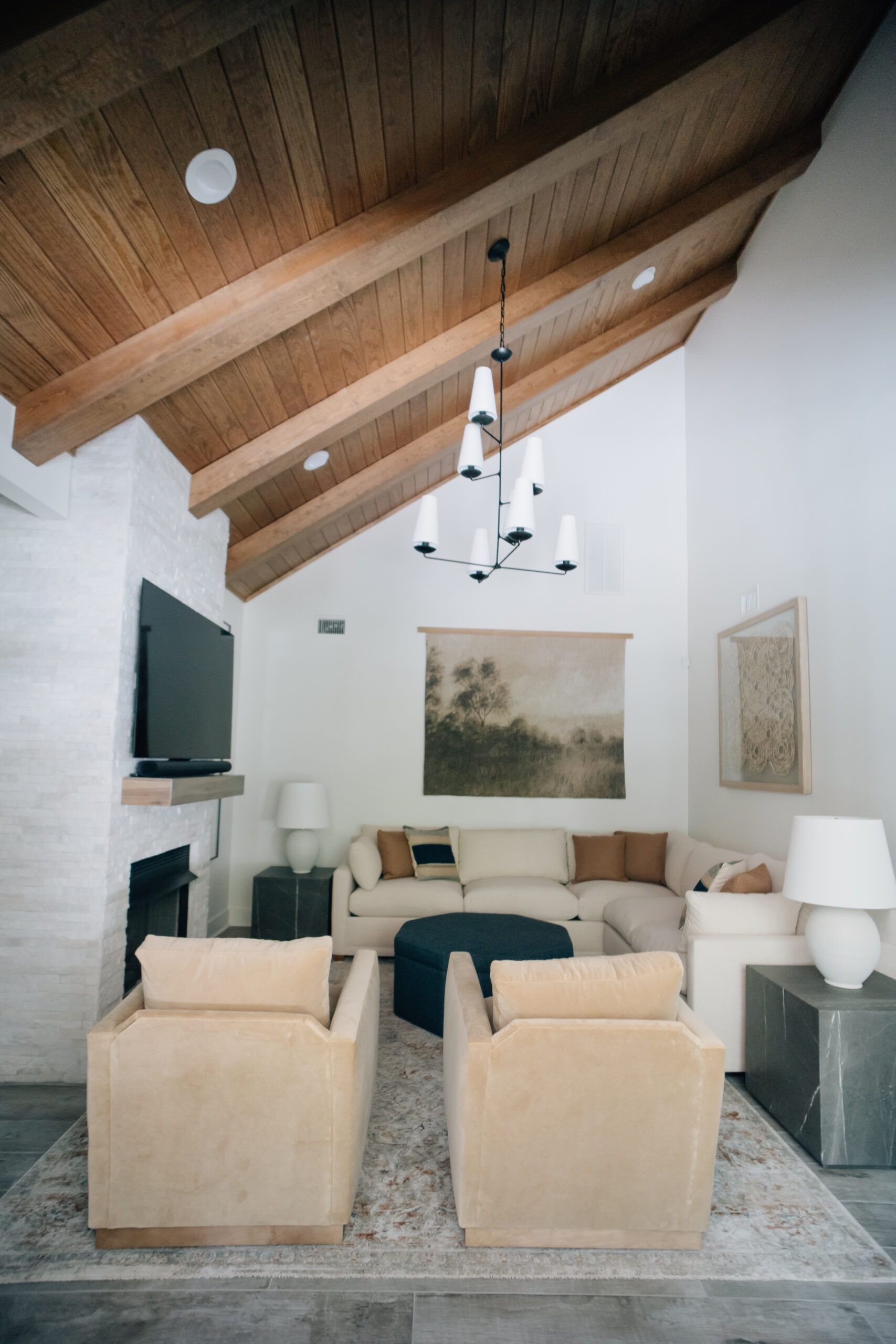
Designing Without Your Home’s Architecture in Mind
Inspiration is an important part of the renovation process. You might save a photo of a kitchen with an oversized island, fall in love with a dramatic lighting installation, or envision completely changing the layout of your primary bathroom. Those ideas can be a wonderful starting point.
But every design has to work within the realities of the home.
One of the more expensive mistakes homeowners can make is developing a vision without fully considering the existing architecture and what will be required to achieve it.
Inspiration Has to Work in Your Actual Home
A room is more than its finishes. Its dimensions, ceiling heights, windows, doors, plumbing, electrical systems, structural elements, and circulation patterns all influence what can be accomplished comfortably and successfully.
This is particularly important during a kitchen and bathroom renovation, where design decisions often interact directly with plumbing, electrical work, cabinetry, appliances, ventilation, and existing structural conditions.
Take a kitchen island as an example. A homeowner may love the look and functionality of a large island with seating, storage, and statement lighting overhead. But the island cannot be considered on its own. There needs to be enough space around it for people to move comfortably. Cabinet and appliance doors need room to open. Seating needs appropriate clearance. The lighting above has to relate to the island’s dimensions and ceiling conditions.
If those relationships aren’t considered early, the desired island may eventually need to become smaller, move to a different position, or require other changes to the room.
The goal of professional interior design isn’t to limit inspiration. It’s to take the ideas you’re drawn to and interpret them in a way that makes sense for your home, your style, and the way you live.
Bathrooms present similar challenges. Moving a shower, toilet, or tub may seem like a matter of changing the floor plan, but plumbing conditions can influence the complexity and cost of those decisions. A beautiful vanity concept needs to work with available wall space, door swings, plumbing, mirrors, lighting, storage needs, and the people who will use it every day.
There are also architectural details that homeowners may simply overlook because they aren’t accustomed to viewing a room through a designer’s lens.
A window may interfere with the cabinetry layout they have in mind. A ceiling condition could affect the lighting they envisioned. A doorway may make a particular furniture arrangement impractical. Removing a wall may introduce structural considerations that change the scope of the project.
None of those conditions necessarily mean the homeowner has to give up the vision they have for the space. Instead, they need to become part of the design conversation.
Plan for Architectural Changes Before Construction Begins
If architectural conflicts are identified during renovation planning, there is time to explore options and decide whether an adjustment is worth making or whether the design should evolve in another direction.
If they’re discovered after selections have been made or construction is underway, homeowners have fewer options, and those options can be more expensive.
This is another area where professional interior design changes the process. Rather than starting with a collection of individual ideas and trying to make them fit, a designer considers the existing home alongside the homeowner’s goals.
What do you love about the inspiration you’ve collected? What feeling are you trying to create? What functions are most important to your family?
Those questions allow inspiration to become personalized design.
That distinction is especially important during a complete home renovation. The goal shouldn’t be to force someone else’s home or a collection of disconnected inspiration photos onto yours. Your home has its own proportions, architecture, natural light, and character.
Thoughtful design brings those things together.
When those conversations happen early, homeowners can make informed choices about where to make meaningful adjustments and where to work creatively within existing conditions. That can help avoid the expensive scenario of designing first and discovering later what has to change to make that design possible.
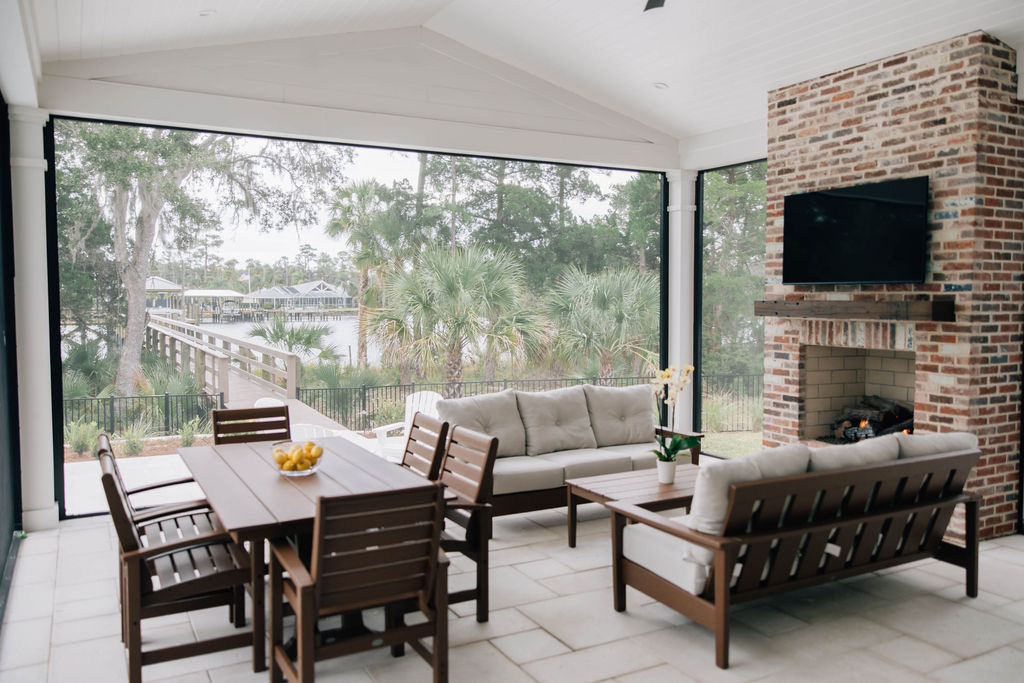
A Better-Planned Renovation Starts With Professional Interior Design
A renovation is an investment in the way you live at home every day. When you’re making that kind of commitment, the cost of professional interior design deserves to be considered alongside the costs it can help you avoid.
A design mistake that requires rework doesn’t only mean purchasing something twice. It can mean additional labor, schedule changes, more decisions, and hours spent solving a problem you thought was already behind you. A material miscalculation can interrupt installation and create stressful last-minute decisions. And a design that doesn’t account for your home’s existing architecture can lead to unexpected adjustments before the vision can become reality.
These are the hidden costs that don’t always appear when you first create a renovation budget.
They are also why working with an interior designer can transform the renovation experience.
At Welcome Home Styling, Jessica Woodward approaches design with both the finished home and the process of getting there in mind. Every home should feel personal to the people living in it, while remaining functional, comfortable, stylish, and timeless. That means looking beyond individual selections to consider how the entire space comes together and how each decision supports the way you want to live in your home.
With professional renovation design services, you have someone helping you navigate the many decisions that come with a renovation while keeping the overall vision consistent.
That support becomes particularly valuable with a full service renovation, when there are countless interconnected details to consider. From early space planning and material selections to the finishing touches that make a home feel complete, having professional guidance allows decisions to be made with the entire project in mind.
The goal of a renovation is to create a home you love living in. One thoughtfully designed around your style, your routines, and the way your family wants to live for years to come. And when the renovation process is supported by experienced professional interior design and intentional renovation planning, you can focus less on solving avoidable problems and more on watching that vision come to life.